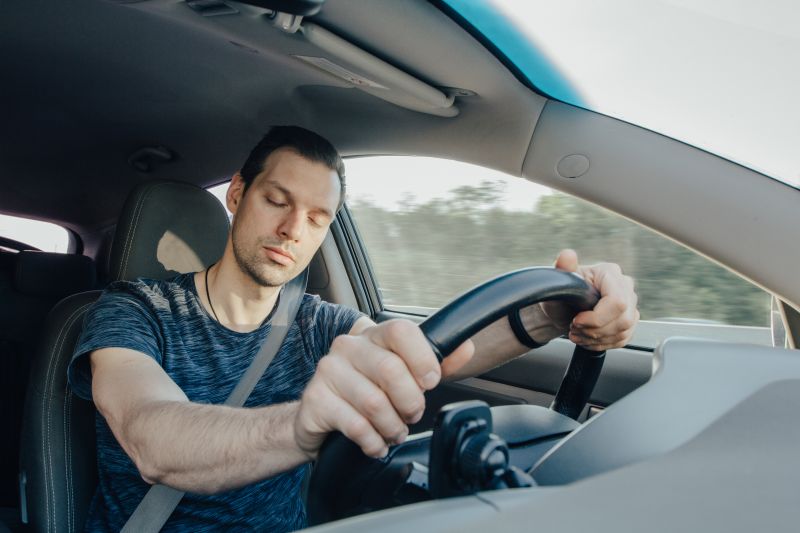
Each morning, millions of people wake up, get dressed, and head out the door to work. For some, that commute requires them to drive a vehicle. In some cases, this is no big deal, because they had a good night’s sleep (and maybe even a cup of coffee) and are ready to roll. But for those who suffer from sleep apnea, they may still be groggy or tired, putting themselves and everyone else on the road at risk. Here’s how “drowsy driving” can cause cognitive impairment, and how treating your sleep disorder could help prevent the unthinkable.
What is Sleep Apnea?
Sleep apnea is a sleep disorder caused either by an airway blockage during sleep (OSA), incorrect signals to the brain to breathe while sleeping (CSA), or both (complex). People with these conditions struggle to breathe at night, waking repeatedly, gasping and choking for air, and feeling tired and anxious throughout the day. In many cases they have no memory of any of their episodes (known as “apneas”).
The Dangers of Drowsy Driving
Because sleep apnea causes you to wake up frequently, it makes getting a complete night’s sleep impossible. This can cause sleep deprivation, where even if you do get a few hours rest it isn’t usually enough to maintain your energy levels throughout the day. This in turn can lead to drowsiness, which can be extremely dangerous, especially behind the wheel. In fact, sleep deprivation can be just as risky as driving drunk. Studies have even shown that just 24 hours of sleep deprivation is equivalent to driving with a blood alcohol level (BAC) of 0.10%!
How to Treat Sleep Apnea
The best way to prevent drowsy driving and the many risks associated with it is to get a proper night’s sleep. The good news is that when it comes to sleep apnea, there are treatment options available. Oral appliances that are custom made by your dentist fit comfortably in your mouth to prop open your airway so you can breathe while you sleep. This in turn creates a more restful night, eliminating the cognitive impairment that can be so dangerous behind the wheel.
If you suffer from sleep apnea, speak to your dentist today about treatment with oral appliance therapy so you can get the rest you need to stay happy and healthy throughout the day, no matter where it takes you!
About Dr. Greenbaum
Dr. Bernard Greenbaum earned his dental degree from the Georgetown University School of Dentistry. He is a proud fellow with the Academy of General Dentistry and is a diplomate of the American Board of Dental Sleep Medicine. To schedule a consultation for sleep apnea treatment at Bethesda Center for Dental Sleep Medicine & TMJ Therapy, visit our website or call 240-929-8034.